Friends of Adin Ballou Logo

Friends of Adin Ballou

Home

About Friends of Adin Ballou

Biography

Walking Tour

Bookstore

Works by Adin Ballou

Works on Adin Ballou and Hopedale

Hopedale Town History

Pictures

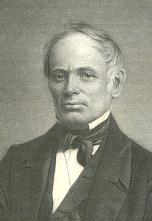
Adin BallouAdin Ballou (1803-1890), the founder of the Hopedale utopian community, was a leading pacifist, socialist, and abolitionist. Unlike many other reformers of his time Ballou did not abandon his pacifist principles during the Civil War. The Hopedale Community (1841-1856) was based upon pacifism and "Practical Christian Socialism," a form of socialism that, unlike Marxism, included private property and the profit motive. In later life Ballou trusted that his ideas would be taken up again, perhaps a century or more in the future. Perhaps the time is approaching when we will be ready to consider again Ballou's ideas on how we can live together, in loving peace and cooperation.

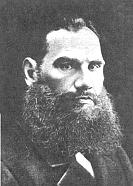
Leo Tolstoy Andrew Dickson White Tolstoy interviewed by Andrew Dickson White on American Literature

He expressed a liking for Emerson, Hawthorne, and Whittier, but he seemed to have read at random, not knowing at all some of the best things. He spoke with admiration of Theodore Parker's writings, and seemed interested in my reminiscences of Parker and of his acquaintance with Russian affairs. He also revered and admired the character and work of William Lloyd Garrison. He had read Longfellow somewhat, but was evidently uncertain regarding Lowell,--confusing him, apparently, with some other author. Among contemporary writers he knew some of Howells's novels and liked them, but said: "Literature in the United States at present seems to be in the lowest trough of the sea between high waves." He dwelt on the flippant tone of American newspapers, and told me of an interviewer who came to him in behalf of an American journal, and wanted simply to know at what time he went to bed and rose, what he ate, and the like. He thought that people who cared to read such trivialities must be very feeble-minded, but he said that the European press is, on the whole, just as futile. On my attempting to draw from him some statement as to what part of American literature pleased him most, he said that he had read some publications of the New York and Brooklyn Society for Ethical Culture, and that he knew and liked the writings of Felix Adler. I then asked who, in the whole range of American literature, he thought the foremost. To this he made an answer which amazed me, as it would have astonished my countrymen. Indeed, did the eternal salvation of all our eighty millions depend upon some one of them guessing the person he named, we should all go to perdition together. That greatest of American writers was--Adin Ballou! Evidently, some of the philanthropic writings of that excellent Massachusetts country clergyman and religious communist had pleased him, and hence came the answer.

— from Andrew Dickson White, Autobiography, Vol. II

Tolstoy on Ballou

For fifty years Ballou wrote and published books dealing principally with the question of non-resistance to evil by force. In these works, which are distinguished by the clearness of their thought and eloquence of exposition, the question is looked at from every possible side, and the binding nature of this command on every Christian who acknowledges the Bible as the revelation of God is firmly established. All the ordinary objections to the doctrine of non-resistance from the Old and New Testaments are brought forward, such as the expulsion of the money-changers from the Temple, and so on, and arguments follow in disproof of them all. The practical reasonableness of this rule of conduct is shown independently of Scripture, and all the objections ordinarily made against its practicability are stated and refuted. Thus one chapter in a book of his treats of non-resistance in exceptional cases, and he owns in this connection that if there were cases in which the rule of non-resistance were impossible of application, it would prove that the law was not universally authoritative. Quoting these cases, he shows that it is precisely in them that the application of the rule is both necessary and reasonable. There is no aspect of the question, either on his side on his opponents', which he has not followed up in his writings. I mention all this to show the unmistakeable interest which such works ought to have for men who make a profession of Christianity, and because one would have thought Ballou's work would have been well known, and the ideas expressed by him would have been either accepted or refuted; but such has not been the case.

— from Leo Tolstoy, The Kingdom of God Is Within You

The Hopedale Community

The members were men and women drawn together by a common interest in the great principles of liberal and practical Christianity at a time when church doctrines were narrow. In addition to the vital principles of ultimate salvation for all, temperance, non-resistance, etc. each one brought some fad of his own—a belief in Spiritualism, or the vegetable diet. Some were non-shavers, and all, I think, were non-smokers. The fads, which were almost as dear to the hearts of their owners as the principles, were often discussed in public, and the free play of the various natures, grave and gay, matter of fact and mischievously humorous, made these meetings a "continuous performance" of vast entertainment. The argument was earnest on either side, and usually closed by each with the same emphatic utterance, "So it seems to me and I cannot see it otherwise!" Neither party convinced the other, but the war of words afforded a certain relief to strenuous natures who, as good-non-resistants could indulge in no other form of warfare.

The small band of vegetarians were firm in the faith and provided much amusement for those who had no scruples against a meat diet.

A wag among the latter having discovered that Mr. Asaph Spaulding, one of the most voluble defenders of vegetarianism had fallen from grace by partaking of codfish charged him with it in open meeting. Mr. Spaulding being for once at a loss for words his wife came to the rescue, exclaiming, "Asaph wanted a codfish and I got him one."

On another occasion a young man who wished to deal fairly by both sides of the question, remarked that one's occupation should be considered in the matter of diet, and that the performance of manual labor required meat.

To shave or not to shave was a burning question. I remember a non-shaver who, having worked his fiery way to the climax exclaimed, "I have not shaved for five years, and I will never shave again!" Instantly the quiet voice of Mr. Swasey answered, "You may get shaved though."

— from reminiscences of Sarah E. Bradbury

News

Friends of Adin Ballou present peace activist Michael True.

Friends of Adin Ballou is proud to present Michael True speaking on the topic "Theorists of Nonviolence: Ballou, Tolstoi, Gandhi and Sharp." The talk will be held on Sunday April 27th, 2008 at 3 p.m. at the Hopedale Unitarian Parish House, 65 Hopedale Street. The presentation is open to the public and free of charge.

Michael True, a longtime peace activist, is the author of People Power: 50 Peacemakers and Their Communities, which covers the history of peacemaking through biographies and poetry; and An Energy Field More Intense Than War: The Nonviolent Tradition and American Literature.

A native of Oklahoma, Dr. True is emeritus professor at Assumption College, and the former president of the International Peace Research Association Foundation. A National Endowment for the Humanities Fellow, and twice a Fulbright Scholar in India, he has taught at Duke (where he completed a doctorate in American literature), Columbia, the University of Hawaii, Nanjing University (China), Utkal University, Bubaheshwar, and the University of Rajasthan, Jaipur (India). Regarding his lifelong passion for world peace, he says, "There is still tremendous work to be done, but changes are being made." He is confident that global nonviolence can be achieved.

New Text Added to This Site

(Oct 11, 2007):
Chapter 7 of Adin Ballou's Autobiography (1896)

Newest Publications

Adin Ballou, Christian Non-Resistance (1846), edited by Lynn Gordon Hughes, 184pp., published by Blackstone Editions. Price $20.00.

Lynn Hughes, To Live a Truer Life: A Story of the Hopedale Community, illustrated by Lindro, 32pp., a children's book published by Blackstone Editions. Price $24.00.

Online Bookstore Created

To order publications by Adin Ballou, click on Bookstore on the sidebar